
Suddenly I want to remake Zing Me
I almost never play games. That is the first thing to get on the record, because what happened last Sunday makes no sense without it.
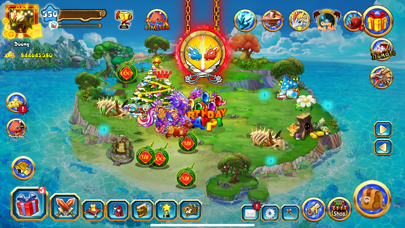
I downloaded a mobile remake of Dragon Island, the game I used to grind every afternoon after school. I told myself I would look at it for five minutes. Then I was staring at the dragons, listening to the sounds, and something very specific came back. It was also the first game I ever topped up a card for. Real money, a scratch card, typed in digit by digit, for a dragon. I cannot describe the feeling properly. It is not fun, exactly. It is recognition.
That night I had the idea that would not leave: why not remake Zing Me?
What Zing Me was, for anyone who missed it
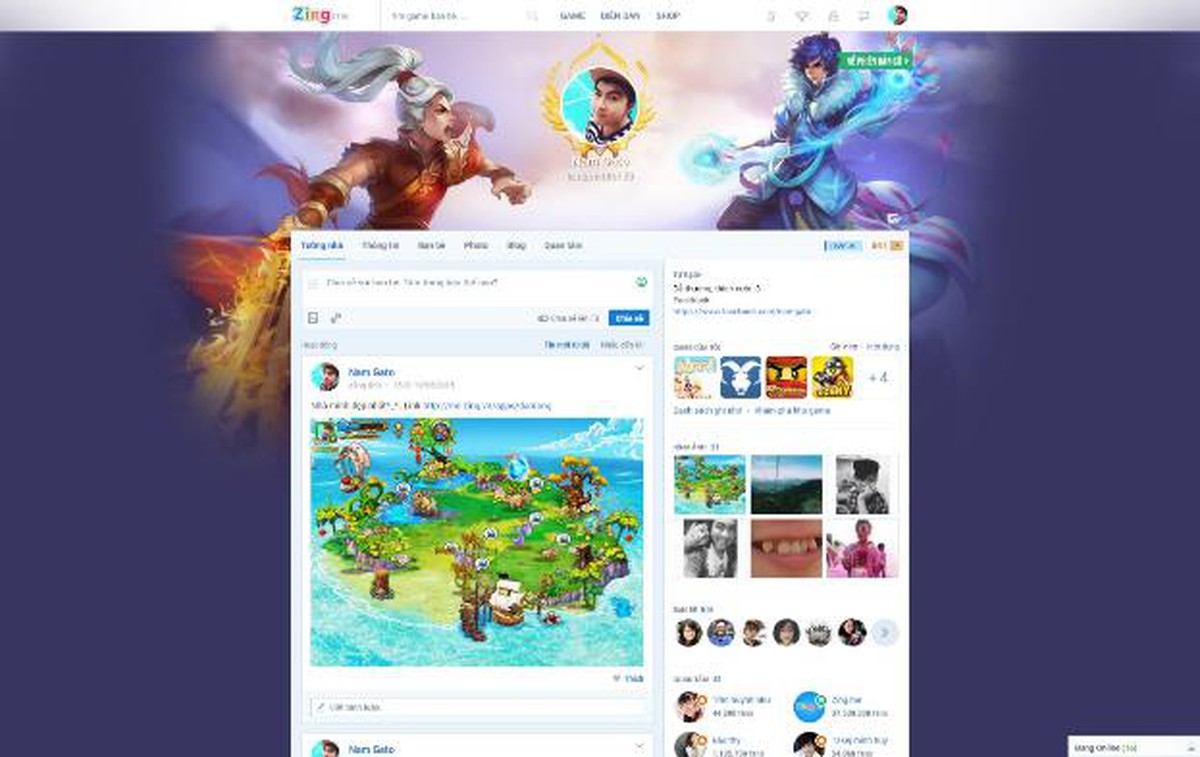
Zing Me was Vietnam's first real social network, launched by VNG in August 2009 after a year of testing. On September 23, 2009 it announced 945,000 users, which put it ahead of Facebook in Vietnam at the time, 918,000. At its peak it reached around 6.8 million users, roughly double Facebook's local numbers then, and later accounts put it near 10 million. Three-quarters of its users were students. One account, and inside it music, news, blogs, photo albums, and Flash games: Happy City, Cloud Garden, Happy Farm, and the one that got me, Dragon Island.
In October 2011 it launched an app store with over 200 apps and games.
Last month its own founder spent most of a commencement speech at Hanoi University of Science and Technology talking about it. Not about Zalo with its 81 million monthly users. About the thing that died. He said the gap showed up in three places: network effects, people, resources. Nothing a team of engineers working nights can fix with effort.
I read that and thought about my dragons.
The archive has the body but not the soul
Here is the part I did not expect to be the easy part. Zing Me is dead, but the Wayback Machine remembers it. Pages upon pages of snapshots, the rendered HTML exactly as visitors saw it.
That same night I put Claude Code in goal mode and pointed it at the archive. The trick that makes this work is a small one: add id_ after the timestamp in a Wayback URL and you get the original file with no toolbar, no rewritten links, no injected scripts. The clean source. From there it is crawling: fetch the raw HTML page by page, pull the CSS, the images, the fonts, rewrite the links to local paths.
As of now I have crawled every page that can be crawled. That sentence needs its qualifier, because the archive has hard limits and I hit all of them. It saved the rendered HTML, not the backend. No database, no login sessions, no feed logic, no game servers. Password-protected areas are gone. Search results, personalized pages, anything dynamic: gone. Some pages only exist as shells, the JavaScript-rendered kind where the content was never captured. Those I will have to port by hand, working from whatever screenshots and memories are left, including my own.
Other people have walked this road. There is a whole genre of it: tools that rip a site out of the archive and rebuild it offline, projects that reconstruct dead frontends pixel by pixel from archived stylesheets. The pattern is always the same. The archive gives you the look. It never gives you the machine underneath.
What I am actually building
I am porting the UI to Next.js, page by page. Not a skin, not a tribute page. The real layout, the real structure, rebuilt as modern components, with the recovered images and copy poured in.
And then the part that matters more than nostalgia: the platform idea. Zing Me's smartest move was becoming a place third-party developers could build on, with shared login and shared payment. I am rebuilding toward that. Open APIs so users can register their own games into the thing. Dragon Island is only where the idea started, not the first game to ship. The shape is general: a shell that looks like 2009 and behaves like a platform, where a game is something you plug in, not something I ship.
I am still researching that part. Authentication, game registration, how a game talks to the shell, what the minimal API surface is. I do not have answers yet. What I have is the crawl, the port in progress, and a repo where it is all happening: ultrabuilders.
Why this one feels different
I have a folder of dead ends. I wrote about it. Projects that got to the interesting part and stopped, because the interesting part is the build and the boring part is everything after. This one might join them. I am honest about that.
But something is different this time and I want to write it down while it is true. Every other project started from an idea. This one started from a feeling I could not describe, on a Sunday night, staring at a dragon I first saw as a kid coming home from school. The idea arrived second. The crawl arrived third. Usually I have to manufacture motivation. This time I have to hold it back enough to do the boring parts right.
The founder was right that effort does not fix network effects, people, or resources. I am one person with an archive and a renderer. I cannot bring back six million students. What I can bring back is the place, and the shape of the platform, and one dragon. Then whoever remembers it can plug in the next game.
If you remember Zing Me, or Dragon Island, or the scratch card typed in digit by digit, the repo is open. Come build the part you remember.